
News
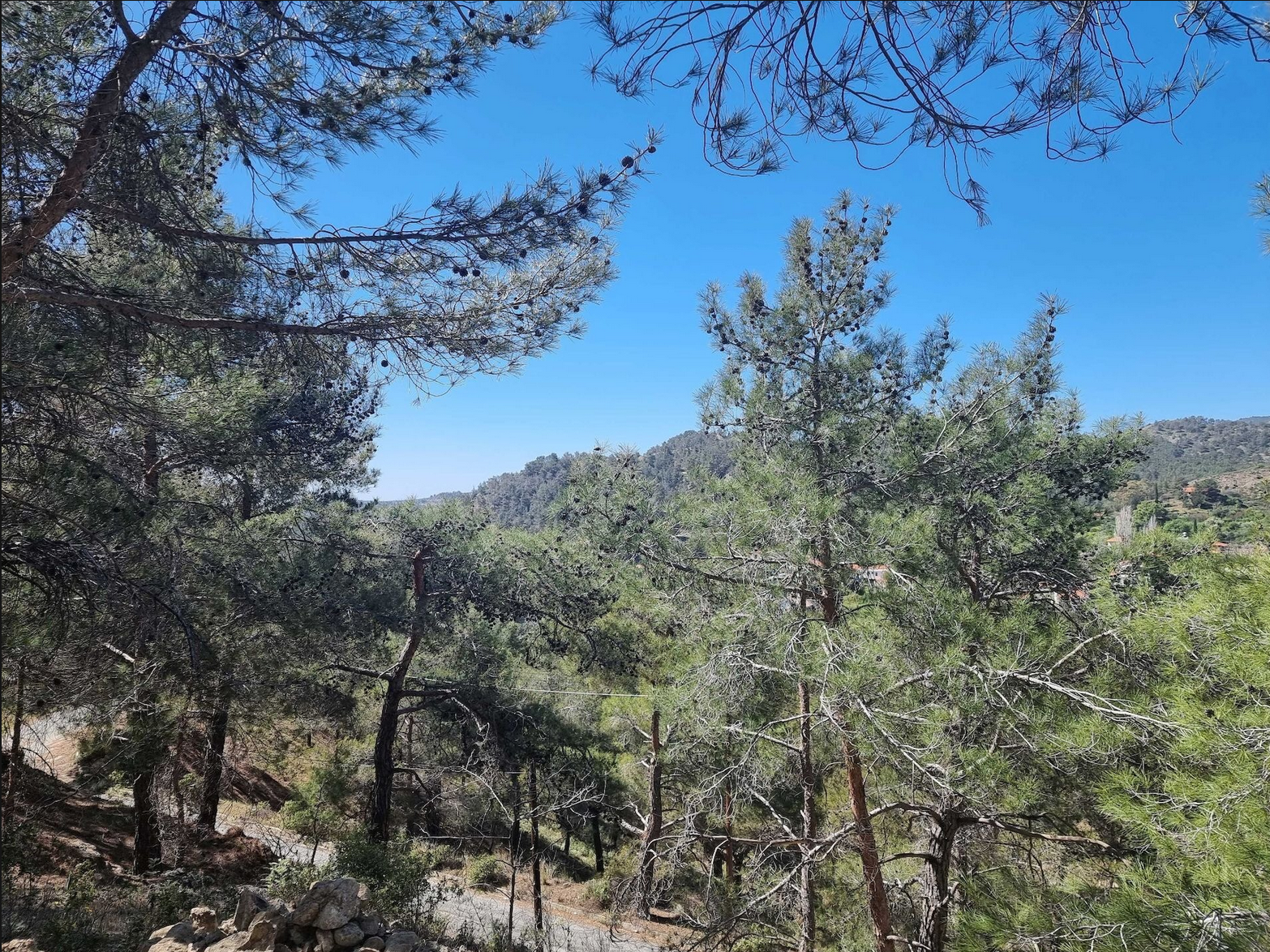
Moniatis Land for Sale in Limassol – Residential Development Opportunities
23 February 2026
Explore Moniatis land for sale in Limassol with residential zoning stability, hillside positioning and strong villa development potential. Strategic acquisition opportunities for serious developers.
Moniatis land for sale in Limassol presents a structurally stable residential development opportunity for disciplined land investors and villa developers. Located approximately 30–32 kilometres from central Limassol, Moniatis operates under controlled residential zoning with defined building coefficients, moderate density parameters, and hillside positioning that supports detached villa construction. Unlike high-density coastal corridors, Moniatis development land is governed by regulatory consistency and limited oversupply risk, making it suitable for boutique residential projects, phased villa clusters, or long-term strategic land banking. Developers evaluating Moniatis plots should prioritise zoning verification, gradient feasibility, infrastructure access, and view orientation analysis before acquisition.
Moniatis, located within the Limassol district approximately 30–32 km from central Limassol, represents one of the most structurally controlled hillside residential land markets in Cyprus.
This page focuses exclusively on:
- Land acquisition
- Development feasibility
- Zoning considerations
- Build potential
- Strategic positioning
- Margin preservation
It does not discuss lifestyle or villa aesthetics.
For institutional zoning and ROI modelling, refer to:
https://foxrealty.eu/news/arti...
Why Moniatis Land Attracts Developers
Moniatis offers:
• Controlled residential zoning
• Detached housing typology
• Elevated sea-view positioning
• Limited density escalation risk
• Established infrastructure
Unlike coastal high-rise corridors, Moniatis land is not exposed to vertical oversupply cycles.
This protects long-term land value.
Market Position Within Limassol District
Moniatis operates between:
• High-density coastal districts
• Semi-urban expansion zones
• Troodos mountain villages
Its position allows:
Urban access without density pressure.
Hillside views without remoteness.
From a development perspective, this creates a differentiated villa market.
Zoning Stability & Density Control
Residential planning regulations in Moniatis are structured to:
- Maintain detached housing format
- Limit excessive coverage
- Restrict vertical intensification
- Preserve hillside profile
For land investors, zoning consistency is a risk mitigation variable.
It reduces regulatory shock exposure.
Development Models Suitable for Moniatis
Moniatis supports:
Model A – Single Premium Villa
High margin, lower exposure.
Model B – Boutique 3–5 Villa Cluster
Controlled phased development.
Model C – Land Bank Strategy
Hold undeveloped land in anticipation of capital appreciation.
High-volume apartment construction is not structurally aligned with zoning logic.
Land Selection Criteria
Developers evaluating Moniatis plots should assess:
• Orientation and sea visibility
• Gradient and slope engineering complexity
• Adjacent parcel build potential
• Road frontage access
• Infrastructure proximity
View obstruction risk must be evaluated at acquisition stage.
Cost Considerations
Hillside construction requires:
- Retaining structures
- Drainage systems
- Foundation reinforcement
These add baseline cost compared to flat suburban land.
However, view monetisation compensates via higher resale pricing.
Margin modelling must integrate both engineering cost and premium positioning.
Demand Structure for Completed Villas
Completed Moniatis villas typically attract:
• Permanent residents
• Relocation buyers
• Detached home upgraders
• Capital preservation investors
Demand is end-user oriented rather than speculative.
This stabilises pricing cycles.
Absorption Strategy
Detached villa absorption differs from apartment markets.
Developers should:
- Avoid oversaturating micro-markets
- Phase release inventory
- Protect pricing authority
- Avoid heavy pre-sale discounting
Patience is rewarded in Moniatis.
Risk Assessment
Primary development risks include:
- Slope engineering cost variability
- Market liquidity slowdown during global tightening
- Overpricing land acquisition
- View obstruction by adjacent development
Mitigation requires:
- Conservative acquisition discipline
- Technical due diligence
- Phased capital deployment
Strategic Listings Available
Active opportunities include:
Moniatis Development Land – Ref 24502 & or Exclusive Hillside Plot – Ref 24503
View All Moniatis Land for Sale
For full zoning breakdown and ROI modelling, refer to Article 63. https://foxrealty.eu/news/arti...
Developer-Focused FAQ – Commercial Land Acquisition
1. What type of development generates the strongest ROI on Moniatis land?
Return on investment in Moniatis development land is primarily driven by disciplined acquisition pricing, view orientation optimisation, and architectural differentiation rather than density maximisation. Unlike coastal Limassol apartment corridors, Moniatis is not a volume-driven market. Zoning parameters favour detached residential development, which means profitability depends on margin per unit rather than high turnover velocity.
The strongest ROI is typically achieved through boutique villa projects of three to six detached units positioned to maximise sea visibility and privacy. Developers who over-leverage density assumptions often compress margin due to zoning restrictions and absorption pacing. Conversely, well-calibrated projects targeting the upper-middle to premium residential segment benefit from pricing resilience and lower direct competition.
Capital modelling should include slope engineering cost adjustments, infrastructure integration, and conservative sales timeline projections. Projects that emphasise architectural quality, environmental positioning, and structural privacy typically outperform generic builds. In Moniatis, disciplined strategy consistently outperforms aggressive scale.
2. How stable is residential zoning in Moniatis for long-term development planning?
Residential zoning in Moniatis is considered structurally stable due to its long-standing detached housing framework. The planning system emphasises hillside preservation, moderate building coefficients, and height limitations designed to maintain visual continuity. This zoning logic discourages rapid density escalation and protects long-term land positioning.
For developers and land investors, zoning stability reduces regulatory unpredictability. In high-growth urban corridors, rezoning volatility can introduce both upside and risk. Moniatis, by contrast, operates under controlled development parameters that limit speculative density shifts. While zoning modifications are always subject to governmental review, Moniatis’ established residential character provides a buffer against abrupt intensification.
Before acquisition, developers should verify current zoning classifications, allowable building coefficients, and coverage ratios through official planning documentation. However, historically, Moniatis has maintained consistent residential use parameters. This consistency enhances institutional confidence and supports long-term capital allocation strategies.
3. What absorption timeline should developers anticipate for Moniatis villa projects?
Absorption timelines for detached villa developments in Moniatis differ from apartment presale cycles in central Limassol. Because the buyer profile is predominantly end-user rather than speculative investor, sales progression is typically measured rather than immediate. A boutique development of three to five villas may require 12 to 24 months for full absorption depending on pricing strategy, macroeconomic conditions, and product differentiation.
Developers should model conservative absorption pacing and avoid liquidity assumptions based on high-rise markets. Moniatis buyers often conduct extended due diligence, including financial structuring and lifestyle evaluation. However, once aligned, transaction stability is stronger because buyers are purchasing for long-term occupancy or capital preservation.
Phased construction reduces risk exposure. Sequential release of units protects pricing authority and allows developers to adjust positioning based on early market feedback. Patience and capital discipline are central to absorption success in Moniatis.
4. How does slope gradient impact construction feasibility in Moniatis?
Slope gradient is a critical feasibility factor when acquiring Moniatis development land. Hillside positioning frequently requires reinforced foundations, retaining walls, and specialised drainage engineering. These structural components increase base construction cost compared to flat suburban parcels.
However, elevation simultaneously enables sea-view monetisation, which significantly enhances resale pricing potential. Developers must integrate both cost escalation and revenue uplift into feasibility models. A proper geotechnical assessment before acquisition is essential to quantify soil stability, excavation complexity, and foundation reinforcement requirements.
Failure to evaluate slope characteristics accurately can lead to margin erosion. Conversely, disciplined engineering planning allows hillside plots to produce superior aesthetic positioning and premium pricing. In Moniatis, gradient is not a deterrent; it is a variable requiring precise modelling.
5. Is land banking a viable strategy in Moniatis?
Land banking in Moniatis can be viable for investors prioritising capital preservation and gradual appreciation. Because zoning restricts density expansion and hillside supply is finite, long-term holding strategies may benefit from scarcity dynamics as Limassol continues to grow.
However, land banking should be approached with due diligence regarding infrastructure maturity, adjacent development potential, and view preservation risk. Holding undeveloped land without planning progression may reduce short-term liquidity but can offer controlled appreciation exposure.
Investors adopting land banking should monitor planning trends, infrastructure upgrades, and demographic shifts. Moniatis historically behaves as a stable residential micro-market rather than a speculative growth corridor, making it more suitable for conservative capital preservation strategies than rapid speculative flipping.
6. How does view orientation influence land valuation in Moniatis?
View orientation is one of the most significant valuation multipliers in Moniatis development land. Because the area is hillside-positioned above Limassol, sea-facing and southwest-oriented plots can command materially higher resale pricing compared to inward-facing or obstructed parcels. Developers must treat orientation as a revenue variable, not merely a design consideration.
Before acquisition, elevation mapping and line-of-sight analysis are essential. Adjacent parcels should be examined to determine whether future development could compromise view corridors. Zoning height limitations mitigate extreme obstruction risk, but adjacent slope gradients may still impact final visibility.
From a modelling perspective, sea-facing villas can generate a price differential per square meter compared to non-view villas within the same micro-zone. That premium must be weighed against potentially higher acquisition cost for view-oriented plots. Developers who overpay for views without calibrating final resale pricing may compress margin; however, disciplined view acquisition significantly enhances pricing resilience during slower absorption cycles.
In Moniatis, orientation is not cosmetic — it is a structural revenue driver.
7. What financing structures are most appropriate for Moniatis villa developments?
Moniatis projects are typically suited to conservative leverage structures rather than aggressive high-LTV financing models. Because absorption cycles are measured and end-user driven, developers should incorporate extended sales timelines into financial modelling.
Common capital stacks include:
• Developer equity + construction loan
• Private investor equity partnerships
• Family office capital with staged drawdowns
Phased financing tied to construction milestones reduces liquidity pressure. Pre-sales are less aggressive than in apartment markets, meaning financing should not depend heavily on early off-plan deposits.
Interest rate sensitivity must be incorporated into 18–24 month horizon modelling. Conservative leverage improves resilience during macroeconomic tightening periods. Developers who structure capital conservatively are better positioned to protect pricing discipline rather than being forced into accelerated discounting.
In Moniatis, capital structure discipline directly correlates with project stability.
8. What are the primary cost volatility risks in hillside construction?
Hillside construction in Moniatis introduces cost sensitivity primarily through structural engineering variables. Retaining walls, reinforced foundations, soil stabilisation and drainage management may fluctuate depending on soil composition and gradient severity.
Material cost volatility in steel and reinforced concrete has amplified global construction risk in recent years. Developers must incorporate contingency buffers between 8%–15% depending on terrain complexity.
Additionally, access road gradient may affect heavy machinery logistics, slightly increasing excavation and foundation cost relative to flat land projects. These factors must be quantified through pre-construction engineering assessments.
However, because resale pricing in Moniatis benefits from elevation premium, cost volatility may be partially offset by stronger per-unit valuation. Disciplined procurement contracts and early contractor locking mechanisms further mitigate exposure.
9. How does Moniatis compare to other Limassol hillside zones?
Compared to coastal hillside districts such as Agios Tychonas, Moniatis generally offers lower acquisition entry while maintaining comparable detached villa pricing bands in certain segments. Agios Tychonas benefits from stronger coastal branding but carries higher land costs and greater development competition.
Moniatis offers relative capital efficiency through:
• Moderate land pricing
• Controlled density
• Reduced speculative exposure
• Limited high-rise intrusion
Developers seeking balanced margin rather than ultra-premium branding may find Moniatis structurally attractive. Competitive saturation is lower than prime coastal strips, providing more pricing autonomy when positioning boutique villa projects.
10. What exit strategies are most effective for Moniatis land developers?
Developers typically employ one of four exit strategies:
- Direct completed villa resale
- Phased villa liquidation
- Land resale with planning uplift
- Partial asset retention + selective sale
Planning uplift strategies can enhance land valuation if preliminary approvals are secured prior to resale. Phased villa release allows pricing calibration based on early absorption performance.
Bulk institutional exit is less common in Moniatis due to boutique scale, though private investors may acquire finished villas as capital preservation assets.
Strategic flexibility at acquisition stage improves exit optionality.
11. Can subdivision increase profitability in Moniatis?
Subdivision feasibility depends on zoning classification, frontage requirements and minimum plot thresholds. Where permissible, subdivision can increase revenue yield by allowing multiple detached villas from a larger land parcel.
However, excessive subdivision may dilute perceived exclusivity and reduce per-unit pricing power. Developers must balance yield maximisation against premium positioning. Boutique cluster design typically preserves pricing authority better than high fragmentation.
Subdivision requires early-stage technical due diligence and planning consultation to avoid regulatory non-compliance.
12. How sensitive is Moniatis to macroeconomic downturns?
Moniatis demonstrates lower volatility than speculative apartment corridors because demand is predominantly end-user driven. Buyers are less likely to engage in panic liquidation during downturn cycles.
However, liquidity may slow during global financial tightening. Conservative leverage and phased capital deployment mitigate exposure. Developers should avoid high debt structures dependent on rapid sell-through assumptions.
Moniatis’ zoning-controlled density reduces systemic oversupply risk, supporting pricing stability even in weaker macro environments.
13. What is the optimal project size in Moniatis?
Boutique developments of 3–6 villas typically offer the strongest risk-adjusted balance. Larger projects increase capital concentration and exposure to absorption pacing risk. Smaller phased projects allow market feedback integration and pricing adjustment.
Scale should align with demand depth and capital availability.
14. How does VAT affect development modelling?
VAT treatment in Cyprus impacts final buyer affordability and developer net margin. Reduced VAT may apply for primary residence buyers subject to legal eligibility. Developers must integrate VAT assumptions early in pricing strategy.
Professional tax consultation is necessary to avoid margin distortion.
15. What due diligence is mandatory before acquisition?
Critical due diligence includes:
• Title verification
• Zoning confirmation
• Gradient analysis
• Infrastructure access confirmation
• Adjacent parcel review
• View obstruction mapping
Technical, legal and engineering diligence reduce feasibility risk.
16. Is Moniatis suitable for ultra-high-end estate projects?
Ultra-high-end estates are feasible where plot size and privacy alignment exist. However, demand depth at extreme pricing tiers is narrower than seafront prestige districts. Architectural differentiation and land positioning are essential.
Developers must carefully calibrate pricing relative to micro-market absorption capacity.
17. What infrastructure risks must be evaluated?
Developers must evaluate slope drainage capacity, road access for heavy construction vehicles and long-term stability of retaining structures. Although infrastructure is mature, terrain-specific engineering requires professional assessment before final design approval.
18. How does demographic demand influence pricing resilience?
Moniatis buyers are typically permanent residents, relocation families or long-term capital holders rather than short-term investors. This demographic profile enhances price stability and reduces volatility spikes during speculative downturns.
Detached housing demand historically demonstrates slower but more durable price cycles.
19. What pricing strategy protects margin in Moniatis?
Pricing should be structured around view premium, architectural quality and exclusivity rather than discount-led absorption. Early heavy discounting compresses margin unnecessarily in measured absorption markets.
Phased pricing with incremental escalation based on early sales performance preserves value.
20. How should developers model liquidity timelines?
Liquidity modelling should assume extended marketing cycles relative to apartment markets. Developers should plan for 12–24 month sell-through horizons depending on project scale.
Cash flow planning must integrate conservative revenue pacing.
21. How does construction sequencing affect capital efficiency?
Sequential construction reduces capital lock-in. Building initial units, measuring demand response and adjusting pricing strategy improves capital efficiency versus full simultaneous build-out.
22. What role does architectural differentiation play?
Architectural differentiation enhances pricing power. Generic villa templates reduce premium positioning. View-aligned design and privacy orientation improve margin resilience.
23. Are there oversupply risks in Moniatis?
Zoning restrictions limit density expansion, reducing oversupply probability compared to high-rise districts. However, localised clustering of similar villa products could temporarily soften pricing.
Monitoring nearby development permits is advisable.
24. How important is acquisition discipline?
Acquisition pricing discipline is the most critical determinant of profitability. Overpaying for land compresses margin more severely than moderate construction cost volatility.
Developers should anchor acquisition price to conservative resale assumptions.
25. What strategic approach ensures long-term success in Moniatis development?
Long-term success in Moniatis depends on conservative leverage, disciplined land acquisition, phased project release, premium architectural positioning and risk-adjusted ROI modelling. Developers prioritising margin stability over volume velocity are best aligned with Moniatis’ structural characteristics.
View herebelow links
Exclusive Development Land for Luxury Villas – Moniatis Limassol & or https://foxrealty.eu/cyprus-de...
Moniatis Properties for Sale (Price Ascending)
View all properties (Moniatis, Limassol) – sorted by lowest price
For institutional zoning and ROI modelling, refer to:
Moniatis Development Land – Zoning, ROI & Investment Report (Article 63)
https://foxrealty.eu/news/arti...
This article functions as the commercial acquisition layer.
Article 62 – Moniatis Land for Sale in Limassol – Residential Development Plots